

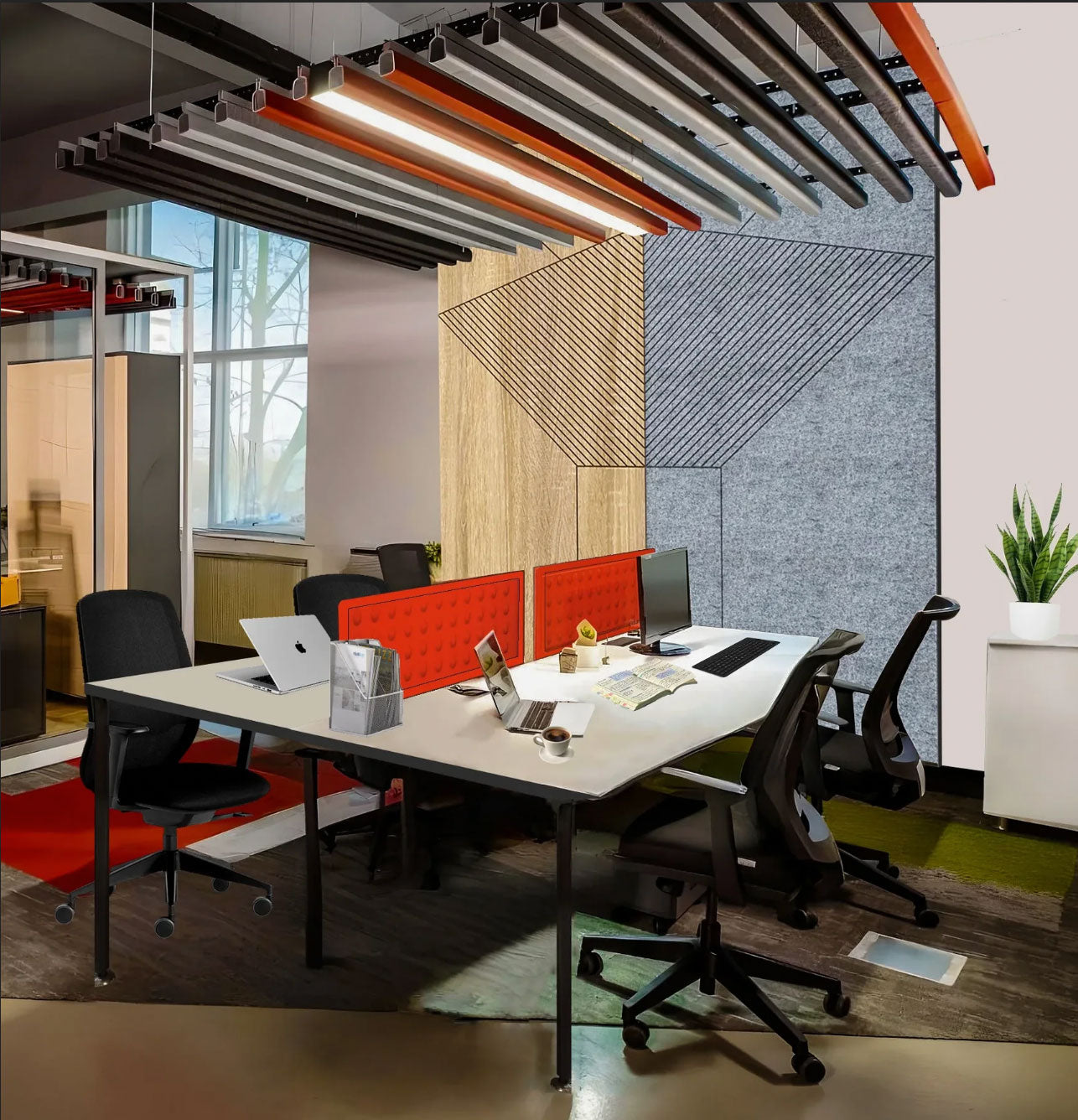
Acoustic panels help control sound reflections in a room by reducing echo (reverberation) and improving speech clarity and overall sound quality. Whether you’re optimizing a home theater, office, podcast room, or music studio, the right acoustic treatment makes a noticeable difference. With AcousticMod’s specialized acoustic solutions, you can achieve a setup that’s both aesthetically pleasing and high-performing, tailored to your space and goals.
What Are Acoustic Panels and What Do They Do?
Sound travels in waves. When those waves hit hard surfaces such as concrete, glass, tile, or drywall, they reflect back into the room creating echo and reverberation that make speech and audio sound unclear.
 Acoustic panels are sound-absorbing materials designed to reduce these reflections. Their porous structure absorbs part of the sound energy and disperses it as a very small amount of heat through internal friction. Instead of bouncing around the room, sound becomes more controlled.
The result: less echo, improved speech clarity, better overall sound quality, and a calmer, more comfortable environment whether it’s a home theater, office, meeting room, podcast space, or studio..
What Are the Different Types of Acoustic Panels?
Not all spaces have the same acoustic needs. Depending on the architecture and the purpose of the room, different panel types are used:


Wall-Mounted Acoustic Panels
Wall-mounted acoustic panels are one of the most popular options for improving room acoustics in offices, home studios, and podcast spaces. Installed on key reflection points, they absorb sound reflections to help reduce echo and improve speech clarity especially in rooms with hard surfaces.
Beyond performance, they also work as a design feature. Available in a wide range of shapes such as hexagons, squares, and circles these panels can be arranged into custom layouts to create eye-catching patterns that blend with modern interiors.
Ceiling Baffle Acoustic Panels
Ceiling baffle acoustic panels are ideal for spaces with high ceilings or limited wall area, where traditional wall panels aren’t practical. Suspended vertically from the ceiling, baffles increase the total sound-absorbing surface area, helping reduce echo and improve overall speech intelligibility without taking up wall space or disrupting the room’s design.
They’re especially effective in open plan offices, lobbies, restaurants, classrooms, and large meeting rooms, where sound tends to bounce and build up.

Tip: For best results, place baffles above the main noise zones (seating areas, workstations, or presentation zones) to target reflections where they’re strongest.


Wooden Slat Panels

Wooden slat acoustic panels combine the warmth of natural wood with effective sound absorption. They typically feature linear wood slats mounted over an acoustic felt backing, which helps reduce echo and improve speech clarity especially in rooms with hard surfaces.
They’re a popular choice for modern interiors where acoustics and aesthetics need to work together. If you’re aiming for a Scandinavian-inspired style or a high-end, luxury finish, wooden slat panels provide a clean, architectural look that elevates the space while enhancing overall sound quality.
Best for: living rooms, home theaters, offices, reception areas, restaurants, and meeting rooms.
9 Ways to Improve Sound Quality with AcousticMod Products
1) Echo-Reducing Acoustic Solutions (Reduce Echo & Reverberation)
Large rooms with hard surfaces can create the “bathroom effect” a mix of echo and reverberation that makes speech and music sound harsh or unclear. AcousticMod acoustic panels are designed to absorb mid-to-high frequencies, which are often the main drivers of distracting reflections.
Result: less echo, clearer speech, and a smoother listening experience in spaces like offices, meeting rooms, home theaters, and studios.
Tip: Place panels at first reflection points (side walls) and behind the listening/speaking position for faster improvements.
2) Aesthetic Harmony with Modern Designs (Acoustics Without the “Industrial” Look)
Acoustic treatment doesn’t have to look technical or bulky. AcousticMod designs are created to complement modern interiors so you can improve room acoustics while keeping the space visually cohesive. From clean geometric layouts to premium finishes, your setup can look intentional, not “added on.”
Result: a room that looks as good as it sounds, ideal for living rooms, reception areas, creative studios, and high-end office spaces.
Tip: Choose shapes/finishes that match existing lines in the room (furniture edges, wall frames, lighting) to make panels feel like part of the design.
3) Ceiling + Wall Panel Integration (360° Room Acoustics)
Combining wall panels with ceiling acoustic solutions creates more balanced, “all-around” control of reflections especially in rooms with hard floors and high ceilings. This setup is ideal for conference rooms and meeting spaces, where intelligibility matters and voices need to stay clear from every seat.
Result: reduced reverberation, clearer speech, and less listening fatigue.
Tip: Treat the first reflection points on side walls and add ceiling treatment above the main seating/presentation zone.

4. Use of Recycled, Eco-Friendly Materials
Sustainability is built into the way we design our products. AcousticMod uses recycled PET fibers to create high-performance acoustic felt, giving plastic waste a second life as a durable sound-absorbing material. This eco-friendly approach supports better room acoustics while keeping materials safe for indoor use better for your space and better for the planet.

5. Quick and Easy Installation Systems
Improving room acoustics doesn’t require complex construction or downtime. AcousticMod acoustic panels are designed for quick, DIY-friendly installation with specialized adhesive backings or clip systems, so you can upgrade sound quality in minutes without drilling or major disruption.
 Result: faster setup, cleaner spaces, and immediate improvement in echo control and speech clarity.
6. Custom Sizes and Color Options
Every space has different acoustic and design needs. With AcousticMod custom acoustic panels, you can choose custom sizes and flexible configurations whether you’re building a full feature wall or adding a compact desktop divider for targeted sound control. We also offer a curated palette of 30+ color options, making it easy to match your interior style while improving room acoustics.
7. Choosing Based on NRC Ratings
Not all acoustic panels perform the same so it helps to choose based on measurable data. AcousticMod products are tested for their Noise Reduction Coefficient (NRC), a rating that indicates how effectively a panel absorbs sound. Using NRC results, we help you select the right acoustic panel thickness and setup depending on your space whether you’re reducing echo in a loud restaurant or fine-tuning sound control in a quiet recording booth.

8) Best Panel Combinations for Open Offices
Open-plan offices need a balance between collaboration and privacy. Combining AcousticMod desk dividers with wall-mounted acoustic panels helps reduce the “cocktail party effect”—the situation where background noise builds up and people end up speaking louder just to be understood.
Result: lower overall noise, improved speech clarity, and a more comfortable workspace for focused tasks and meetings.
Tip: Use dividers between workstations and treat nearby wall reflection points to prevent sound from bouncing back into the room.
9. Suitable Models for Educational and Medical Spaces
In schools, clinics, and hospitals, clarity and calm are essential. AcousticMod acoustic panels can be specified for sensitive environments with options such as fire-rated performance and hygiene-focused (antibacterial) surfaces, supporting quieter spaces where communication and comfort matter.
Result: clearer speech, reduced noise stress, and better acoustic comfort for students, patients, and staff.
Tip: Prioritize high-impact zones like classrooms, corridors, waiting areas, and consultation rooms.
What to Consider When Choosing Acoustic Panels
Choosing the right acoustic panels comes down to three practical factors: coverage, placement, and thickness. When you get these right, you can improve room acoustics, reduce echo, and boost speech clarity without over-treating the space.
1) Coverage (How much area to treat?)
You don’t need to cover every wall. As a general starting point, treating around 20–30% of key surfaces can make a noticeable difference—especially in rooms with lots of glass, concrete, or hard flooring.
2) Placement (Where should panels go?)
For maximum impact, install panels at first reflection points—the spots where sound hits and bounces back first. In many rooms, this is typically around ear level on side walls, plus areas behind the listening or speaking position.
3) Thickness (Which depth works best?)
Panel thickness affects what frequencies you absorb:
-
Thicker panels (50 mm+) help more with lower frequencies and “boomy” rooms.
-
Thinner panels (12–24 mm) are often effective for speech clarity and reducing flutter echo.
Tip: If your space is mainly for meetings or calls, prioritize placement and coverage first; if it’s for music or recording, thickness becomes more critical.

Share:
Acoustic Ceiling Panels: A Smart Solution for Better Sound Control
Transform Your Home Theater with AcousticMod Wall and Ceiling Systems