

Choosing Acoustic Panels:
Everything You Need to Know
A poor acoustic choice can make even the most carefully designed space feel unbearable. The right panel does far more than eliminate echo — it boosts productivity, reduces stress, and gives a space genuine architectural character.
01 Which panel is best?
There is no single answer to "which acoustic panel is best" — it depends entirely on the needs of the space. That said, keep these guiding principles in mind:
- For maximum sound absorption, felt or fabric-wrapped panels with a high NRC rating are the top choice.
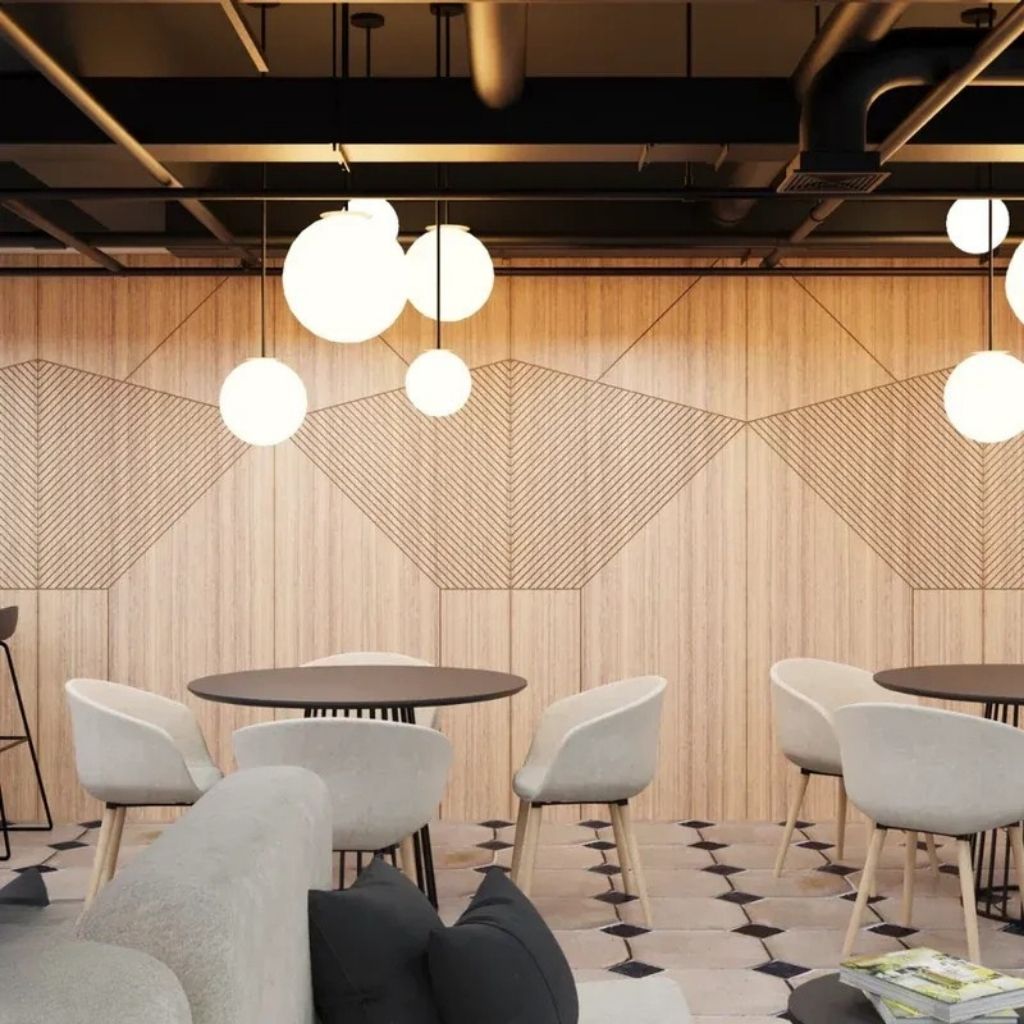
- For a decorative + acoustic balance, wood slat acoustic panels stand out as an excellent option.
- In large open-plan offices and commercial spaces with high ceilings, ceiling baffles and suspended acoustic systems deliver the most effective results.
- The right choice should be made by evaluating the size of the space, the level of reverberation, design expectations, and budget together.
02 What is an NRC rating and why does it matter?
NRC (Noise Reduction Coefficient) is a standard measure of how much sound a material absorbs. It ranges from 0 to 1.00 — the higher the value, the better the absorption.
For offices, restaurants, and studios, panels with an NRC of 0.80 or above are recommended. Values below this threshold tend to underperform in high-traffic, high-noise environments.
03 How do you reduce echo in an office?
Echo problems in offices typically stem from three root causes: hard surfaces, open-plan layouts, and high ceilings. Each requires its own solution:
- Install high-NRC acoustic panels on walls to absorb reflected sound at the source.
- Add acoustic baffles or ceiling clouds overhead — especially critical in open-plan environments.
- Soft surfaces such as rugs, curtains, and upholstered furniture passively absorb sound throughout the day.
- Desk dividers and felt partitions break up sound between individual workstations.
- Meeting rooms, due to their high speech intensity, benefit from additional dedicated acoustic treatment.
Once acoustic issues are resolved, speech clarity improves, distractions decrease, and overall working comfort rises in measurable ways.
04 Felt or wood slat?
These two panel types are best thought of as complementary rather than competing. Your choice comes down to priorities.
- Higher sound absorption
- Lightweight, easy to install
- Clean, modern aesthetic
- Ideal for offices, studios, schools
- Premium natural wood aesthetic
- Architectural depth and character
- Acoustic felt backing for performance
- Perfect for lobbies, executive offices, restaurants
For spaces where maximum acoustic performance is the priority, felt panels are the clear choice. Where design takes center stage — reception areas, hospitality, and executive environments — wood slat panels deliver both aesthetics and function. Using both together is also a practical approach: felt panels in functional zones, wood slat panels on feature walls and visible facades.

Share:
Decorative Slat Wood Panels
Acoustic Ceiling Baffles: Complete Specification Guide for Interiors