

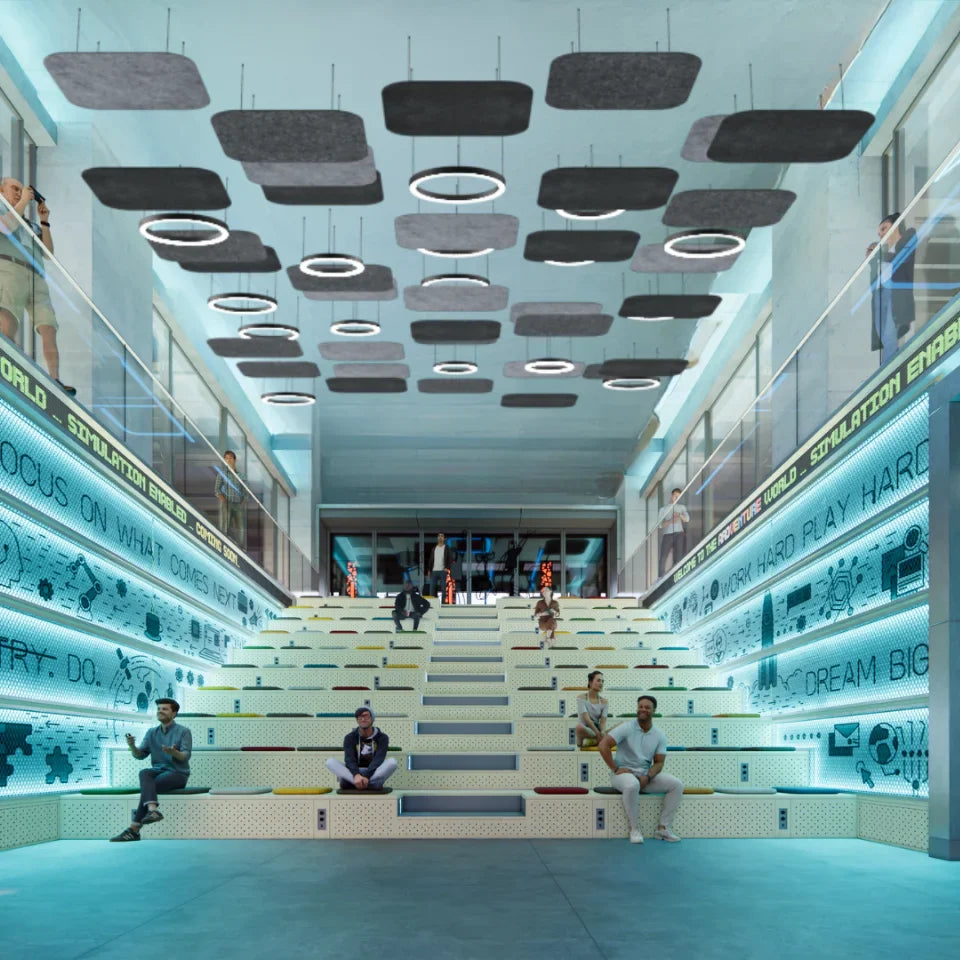
Acoustic Ceiling Panels: A Smart Solution for Better Sound Control
In modern architecture, open layouts, high ceilings, and hard surface materials such as concrete, glass, and tile create visually impressive spaces—but they often lead to echo and excessive reverberation. Acoustic ceiling panels are designed to control these reflections, improving speech clarity, reducing noise levels, and creating more comfortable environments.
What Are Acoustic Ceiling Panels?
Acoustic ceiling panels are sound-absorbing elements installed directly onto ceilings or suspended vertically as baffles or clouds. Their purpose is to control sound reflections that would otherwise bounce between floors and ceilings, causing echo buildup and reduced intelligibility.
Because sound naturally travels upward and reflects downward, treating the ceiling addresses one of the room’s most active reflection points, dramatically improving acoustic balance.
How Do Acoustic Ceiling Panels Work?
When sound waves hit hard ceiling surfaces, they reflect back into the room. Acoustic ceiling panels are made from porous or fibrous materials that absorb this sound energy. Instead of reflecting, part of the sound energy is converted into a minimal amount of heat through internal friction within the material.
- Reduced reverberation time
- Clearer speech
- Lower overall noise levels
- Less listening fatigue
Where Are Acoustic Ceiling Panels Most Effective?
Acoustic ceiling panels are especially beneficial in spaces with high ceilings or limited wall area.
- Open-plan offices
- Conference and meeting rooms
- Restaurants and cafés
- Lobbies and reception areas
- Classrooms and educational facilities
- Healthcare environments
- Home theaters and podcast rooms
In large spaces, ceiling treatment often delivers faster and more balanced results compared to wall-only acoustic solutions.
Types of Acoustic Ceiling Panels
1. Ceiling Baffles
Suspended vertically from the ceiling, baffles increase sound-absorbing surface area without blocking lighting or airflow. They are ideal for large, open spaces.
2. Ceiling Clouds
Horizontal panels suspended below the ceiling surface. These target specific zones such as seating areas or presentation spaces.
3. Direct-Mount Ceiling Panels
Installed directly onto the ceiling surface, these panels are suitable for smaller rooms or areas with standard ceiling heights.
Benefits of Acoustic Ceiling Panels
- Improved speech intelligibility
- Reduced echo and background noise
- Better concentration and productivity
- Enhanced comfort in busy environments
- Aesthetic integration with modern interiors
- Flexible installation options
Modern ceiling acoustic solutions are available in various shapes, colors, and finishes, allowing them to function as both performance elements and architectural design features.
What to Consider Before Installation
- Room size and ceiling height
- Primary use of the space (speech, music, meetings, dining, etc.)
- Noise Reduction Coefficient (NRC) rating
- Coverage percentage
- Integration with lighting and HVAC systems
Strategic placement above main noise zones—such as workstations, dining areas, or presentation spaces—can significantly improve results without over-treating the room.
Conclusion
Acoustic ceiling panels are essential tools for creating balanced, comfortable, and high-performing environments. In today’s architecture—where openness and minimalism dominate—ceiling-based acoustic treatment ensures that spaces not only look impressive but also sound exceptional.
Share:
Acoustic panels are essential solutions for improving sound quality in modern interiors
What Are Acoustic Panels? 9 Ways to Improve Sound Quality with AcousticMod